
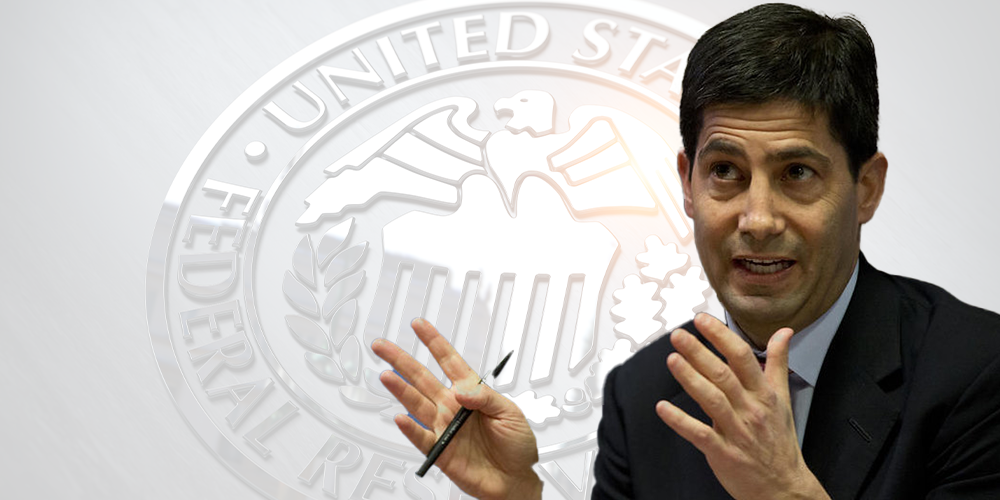
Kevin Warsh understands the Federal Reserve and monetary policy, and he undoubtedly has the credentials to be the next Fed chair. But will he be servile to the White House and how will he cope with the realities of today’s monetary policy environment? The answers aren’t clear.
Interest rate policy
Interest rate policy is at the heart of President Donald Trump’s assault on the Fed. Trump has made repeated calls for slashing the Fed Funds rate to 1%, saving the government ‘trillions’ in interest costs. While Trump amusingly said it would be inappropriate to ask his nominee about rate cuts, presumably ex-hawk Warsh is capable of reading Truth Social and got the memo.
In Supreme Court cases, a justice can pick and choose among an array of plausible precedents and unprovable argumentation, citing those providing the basis for a selective ruling consistent with the justice’s predilections, be that sophistry or interpreting the law. Monetary policy is similar – productivity is rising so rates can be cut without generating inflation; labour markets are soft but inflation is poised to fall back to 2%; tariff hikes are a one-time price boost and should be looked through, the balance of risks is tilted to x or y.
Warsh speaks about eschewing data dependence, given revisions and measurement error, and forward guidance as a communications tool. What then is his compass? In steering interest rates, when does plausible technical analysis morph into casuistry and obeisance?
Fiscal policy and financial markets
Warsh correctly notes fiscal and monetary policy can be blurred in crises but expresses scepticism about normal times. The Fed throttles comments on fiscal policy. It is easy to decry America’s unsustainable fiscal policy and suggest monetary policy should normally disregard fiscal policy.
But the US’ longstanding fiscal mess, aggravated by the Big (not so) Beautiful Bill, places upward pressure on the term premium. Longer-term rates – key for investment, mortgages, etc. – may not respond to short-term Fed rate changes. Ten-year yields are roughly half a percentage point higher than when the Fed started its rate-cutting cycle in 2024. Artificially pushing down the short end may undermine low-inflation credibility, causing longer-term rates to spike and steepening the yield curve.
Is Warsh prepared to stand up to the White House if needed not only on the funds rate, but in the face of a steepening yield curve and calls tantamount to fiscal dominance, no matter the financial market repercussions?
The balance sheet
Warsh is a sceptic on balance sheet expansion, though recognises it may have been a reasonable crisis response. He offers legitimate arguments that it went too far. One can long for a ‘scarce reserves’ regime versus the current ‘ample’ regime.
But we are where we are. The Fed shrunk its balance sheet between 2022 and 2025. Recently, as reserves dropped, money market tensions emerged, complicating day-to-day operations. The Fed now needs to increase reserves consistent with a growing economy.
The idea that a shrinking balance sheet might provide added scope for cutting rates is fraught with risk and seemingly flies in the face of today’s money market realities.
Central bank independence
Warsh suggests central bank ‘independence’ has errantly allowed the Fed to go far beyond the realm of monetary policy. ‘Central bank independence’ is a shorthanded misnomer. The Fed operates in an accountability framework – the president nominates board members, the Senate approves them; Congress sets the dual mandate goal; the chair testifies at least twice a year and interactions between the Fed and Congress run deep.
What the Fed really has is instrument independence – it is alone responsible for rate-setting and the balance sheet. Instrument independence is essential for achieving better inflation outcomes.
Suggesting the term ‘independence’ has allowed for overreach in areas such as financial regulation – where for example the Federal Deposit Insurance Corporation, Office for the Comptroller of the Currency, state supervisors, Securities and Exchange Commission, Commodity Futures Trading Commission play a role – is a bit of a caricature and distraction.
Financial regulation
Should financial regulation be loosened – sorry, ‘tailored’? Warsh cut his teeth at the Fed at the time of the 2008 financial crisis. Prior to the 2008 financial crisis, banks besieged financial authorities, arguing for light-touch principles-based regulation, claiming they understood the risks and exercised tough due diligence and risk management. That was false. Regulatory and supervisory oversight failed. Amid a searing economic collapse, capital, liquidity and leverage standards were raised.
In the last two years, Silicon Valley Bank and the Archegos Capital Management collapse caused huge turmoil. Embedded leverage between banks and non-banks is high. Yet, today’s mantra, backed by the White House and Treasury, involves easing financial regulation, let alone encouraging cryptoassets and stablecoins even though heavily associated with money laundering and crime and the largest stablecoin provider is outside the US.
There is a risk the lessons of 2008 are being forgotten and that Fed supervision and regulation could again fail America. Will a new chair be servile to the administration on financial regulation?
It’s a more complicated world
Before the 2008 crisis, the great moderation kept inflation low and contained. Today, advanced economies face high public debts and fiscal strains and bigger balance sheets. Potential growth has declined over time, policy uncertainty is rising, the significance of artificial intelligence for economies is unknown and geopolitical risks are more acute. First principles and speeches won’t address the intricate real-world choices that await a new Fed chair.
Mark Sobel is Chief Economist and Vice Chair at OMFIF.

Image Source: Rudin Group
Interested in this topic? Subscribe to OMFIF’s newsletter for more.