
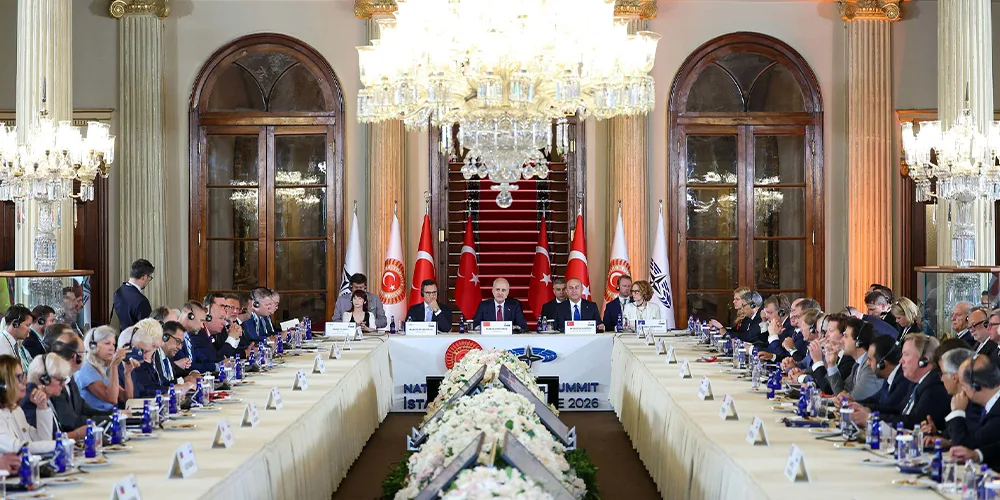
Since the days of the silk road, Türkiye has been considered the great bridge between the East and the West. The Ankara Nato summit shows that this framing is outdated. In an era of geopolitical fragmentation, Türkiye is becoming something more consequential, a hub through which Europe’s security, energy and trade increasingly flow.
It is also a hub that is becoming indispensable to the Nato network, particularly as the US threatens to decrease its role in the alliance as the continent contends with the risk of Russian aggression while simultaneously relying on Russian gas.
Türkiye as a hub for defence
Türkiye’s strategic location makes it crucial for Europe’s defence. It controls access to the Black Sea through the Turkish Straits and as such is central to Nato’s posture towards Russia and maritime security. To the south, Türkiye borders regions affected by conflicts in Syria, Iraq and the wider Middle East, making it significant for intelligence, counterterrorism and regional crisis management.
Diplomatically, Türkiye has maintained channels of communication with many actors that other Nato members cannot easily engage with, including Russia, putting it in a position for strategic mediation during regional crises. This ‘soft power’ is matched by military capability, as Türkiye boasts the second largest military in Nato.
Türkiye as an industrial hub
Türkiye’s military capability is bolstered by a powerful defence industrial complex. As Europe ramps up defence spending, this defence industrial base is becoming more strategically relevant, not just militarily but economically. Last year, Türkiye’s defence exports reached more than $10billion. The majority of these were to Nato members, with Turkish defence companies securing large contracts, such as Arca’s multi-billion-dollar deals with Slovakia, Bulgaria and Estonia.
This success has increased confidence in Turkish defence equities as well. Defence giant Aselsan became the first Turkish company to reach $30bn in market capitalisation in January 2026, while its stock price has radically increased since 2024 (Figure 1).
Figure 1. Turkish defence equities are soaring
Aselsan stock price in the last 5 years, as of 6 July 2026
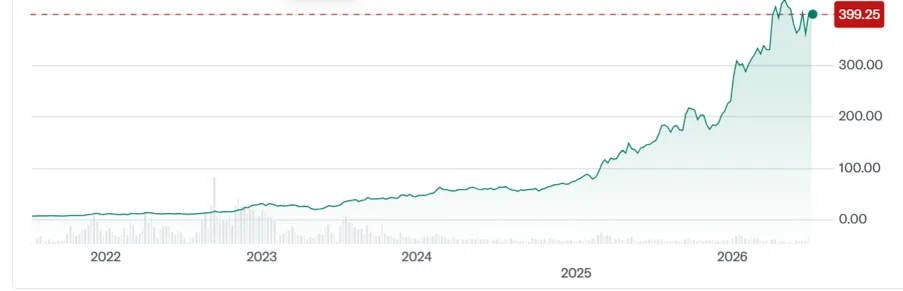
Source: ASELSAN Elektronik Sanayi ve Ticaret Anonim Sirketi
Türkiye is emerging as an energy hub
While Türkiye has long been a connecting point for natural gas transport – providing a corridor for natural gas to flow from Asia to Europe through its extensive pipeline network – it is successfully transforming its position in the supply chain through liquid natural gas infrastructure development and domestic production.
Figure 2. Türkiye’s position connecting gas from Asia to Europe
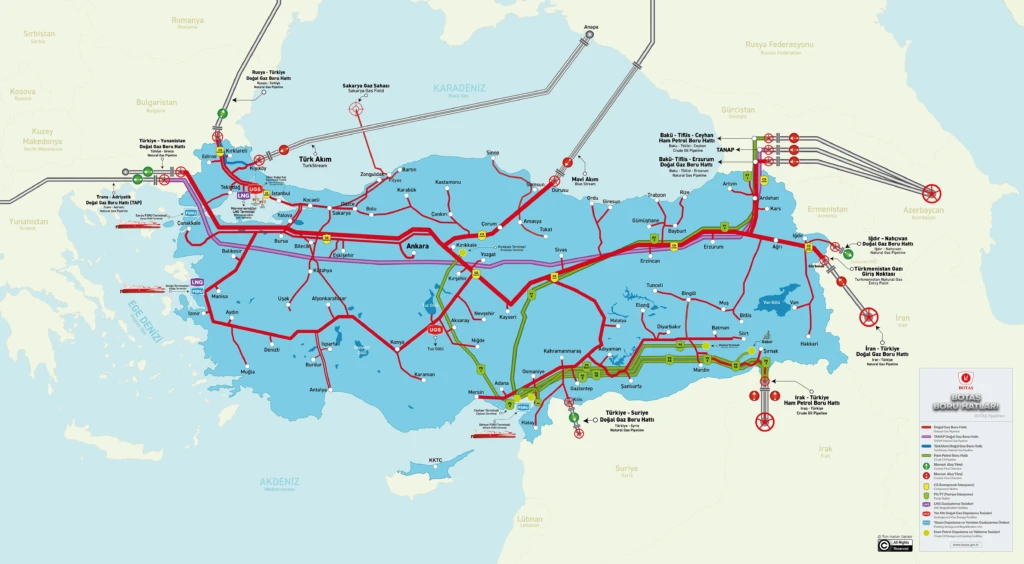
Source: BOTAŞ
Over the last decade, Ankara has increased its LNG infrastructure, significantly investing in LNG terminals, storage and regasification units. BOTAŞ Petroleum Pipeline Corporation, Türkiye’s state-owned crude oil and natural gas pipelines trading company, has signed a series of import agreements to import LNG from diversified sources in the Middle East and the US. In addition, the development of the domestic Sakarya gas field in the Black Sea has allowed Türkiye to meet significant domestic demand.
Combining domestic gas, LNG and imported natural gas has allowed it to export its own ‘Turkish blend’ of gas through its existing pipeline network. BOTAŞ has also signed historic export agreements with countries in south and eastern Europe, including Bulgaria, Hungary and Moldova.
While the full benefits of Türkiye’s diversification strategy have yet to be fully realised, it has positioned the country to become a hub for the world’s energy, and a crucial source of gas for Europe as it diversifies away from Russia.
From geopolitical hedge to indispensable strategic partner
As Türkiye continues to develop its energy sector and defence industry, it is maximising the strategic advantages of its geography in new ways. These give it the potential to become one of Europe’s most important strategic partners and one of Nato’s greatest assets. The economic and political leverage that comes with serving as both an energy and defence hub will strengthen Türkiye’s geopolitical influence, enhancing its strategic autonomy while simultaneously contributing to the security and resilience of the military alliance.
The decision to hold this year’s Nato summit in Ankara reflects the growing recognition of this importance within the alliance. It suggests that political differences, which in previous years strained relations between Türkiye and many European partners, are increasingly taking a back seat to shared security priorities in an era of growing geopolitical uncertainty.
Mariam Khan is an Economist at OMFIF.
Join OMFIF on 16 July for Financing resilience: the intersection of defence and sustainable spending.

Image credits: NATO North Atlantic Treaty
Interested in this topic? Subscribe to OMFIF’s newsletter for more.