
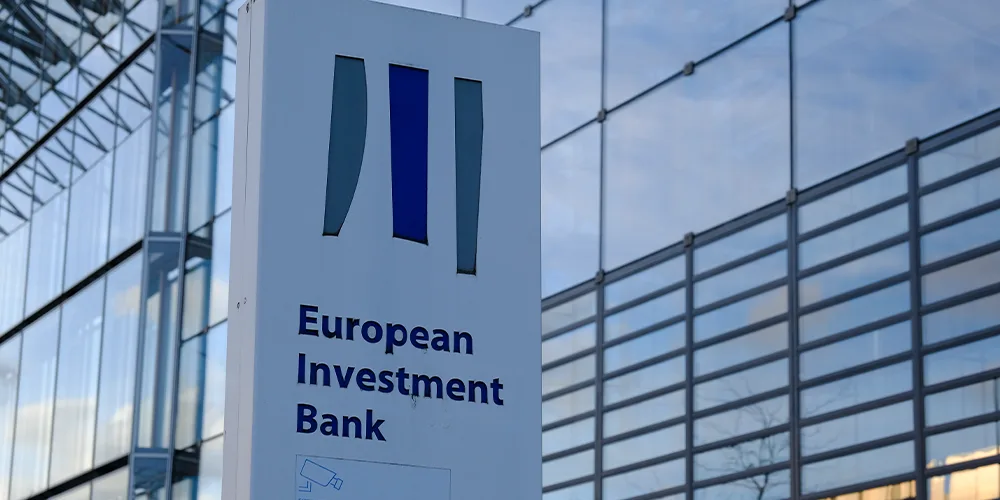
Andy Burnham, the probable new British prime minister, should urgently seek re-engagement with the European Investment Bank, the European Union’s house bank, which provided substantial support to British investment before the UK’s withdrawal from the EU in 2020.
Under the ‘re-set’ procedures established by Prime Minister Keir Starmer and his predecessor Rishi Sunak, likely to be continued by Burnham, the UK is promoting a series of modest realignments with the EU. A Burnham-led government is likely to continue to exclude a return to the single market and customs union (effectively rejoining the EU).
An effort to rebuild links with the EIB is legally possible and should be placed on the agenda of the rescheduled EU-UK summit meeting due in coming weeks.
Seeking to resume vital new investment from this unique EU source should become one of Burnham’s economic policy priorities. The EIB is extending its operations to financing defence projects – making it still more relevant to Britain’s requirements.
Reaching agreement will not be simple
Drawing up an agreement with the EIB would be complex and there would be a price to pay. Shareholder governments would rightly want compensation for the extra capital they paid in when the UK left the EIB in 2020. But the EIB knows the UK and its financial and other markets well. I am sure that the bank itself, if duly authorised under the appropriate conditions, would welcome such a move.
This potential development is of wider interest extending beyond the UK. The European economy is not in good health. Many EU companies and banks would be keen to work with the EIB to spearhead new sources of business with British economic and governmental partners and the international institutions already active in the UK.
Despite its overriding EU mission, the EIB is authorised under its statutes and with the consent of its governing body (the EU finance ministers) to lend for projects in states outside the EU.
Provided political agreement could be reached, there is no bar to a resumption of funding by the EIB and its venture capital subsidiary. the European Investment Fund. Historically EIB lending outside the European Community (subsequently Union) has amounted to only a small percentage of total lending. Initially much of it took place in former British and French colonial territories under arrangements such as the Lome Convention. From the 1990s, however, substantial lending programmes were launched in a number of central and eastern European countries which were then aspiring to EU membership.
EIB could help kickstart UK economic sluggishness
Lack of investment is one important reason for the serious setback to the UK economy since the 2016 referendum decision to leave the EU. This exacerbates the UK’s chronically poor productivity performance, which in turn is a major contributor to the current loss of jobs, particularly among young people. Brexit has cost the UK economy at least 6% of gross domestic product, according to Bank of England data. Some estimates have put the figure as high as 8%.
Uncertainty and lack of confidence compared with the steady pre-Brexit growth period have been caused by other factors beyond Brexit, both international and domestic. But a major factor is indisputably falling investment – and this is a field where the EIB is preeminent.
Based in Luxembourg, and founded under the 1957 Treaty of Rome, the EIB is the world’s biggest multilateral development bank in terms of its lending and borrowing on the international capital markets.
Under the Treaty the EIB’s primary function is to promote the balanced economic development of the (then) European Community. In 1973 the UK became a member and shareholder of the EIB and benefitted from its lending operations and investment in the UK. With its triple-A rating the EIB is able to borrow and lend at low interest rates and long term.
Up to Brexit the EIB invested some £120bn in long-term lending for UK projects, with annual lending running at around £7bn-£8bn. In terms of actual investment promoted these amounts can be nearly tripled. The EIB does not normally lend more than around a third of total project cost and seeks to act as a catalyst to attract joint financing from other lenders. Annual new investment supported in the UK thus began to represent up to £20bn a year.
Historical precedent for investment in UK infrastructure
Since it possesses a strong in-house financial and technical engineering capability EIB involvement often acts as a ‘seal of approval’ to other financial institutions for projects it agrees to finance.
The great majority of the EIB’s investment is in large infrastructure projects (famously trans-European networks) and its UK operations have been widely distributed. In addition to iconic national projects such as the channel tunnel, the second Severn crossing, the Heathrow express, the jubilee line extension and many other major road, rail and power projects, it has invested extensively in Scotland, Wales and Northern Ireland as well as in the English regions.
Among the last, just a month before the UK formally left the EU, was the Manchester Metrolink extension, well known to Burnham as mayor of Greater Manchester from 2017-26.
After 1988 the EIB also began to support investment in social capital such as schools, universities and housing. Examples include the new Royal Liverpool Hospital, the New University of Ulster, Bangor University and new hospital in Edinburgh for sick children. The EIB was pursuing a ‘levelling-up’ policy before that became a national political priority.
Brexit put a stop to that. The UK ceased to be a member and shareholder. The withdrawal agreement stated: ‘After withdrawal UK projects will not be eligible for new operations from the EIB reserved for member states’. The UK was also excluded from funding by the EIF, which after a slow start in 1993 developed into an important source of risk and seed capital in Europe.
A policy priority
Sadly, the cessation of this massive EIB and EIF investment in the UK has not remotely been replaced by the successor regional investment banks established in recent years. Moreover, the enormous multi-billion investment in data centres and artificial intelligence promised by the giant US tech companies has so far proved to be a mirage.
Getting investment flowing again is of huge importance for Burnham and his ministers. They should give full-hearted attention to this dossier now – and endeavour to reach an outline EIB agreement with the EU by the end of the year.
Sir Brian Unwin was President of the European Investment Bank (1993-2000).
Join OMFIF on 9 July for to examine Germany’s economic priorities: growth, competitiveness and reform.

Interested in this topic? Subscribe to OMFIF’s newsletter for more.