
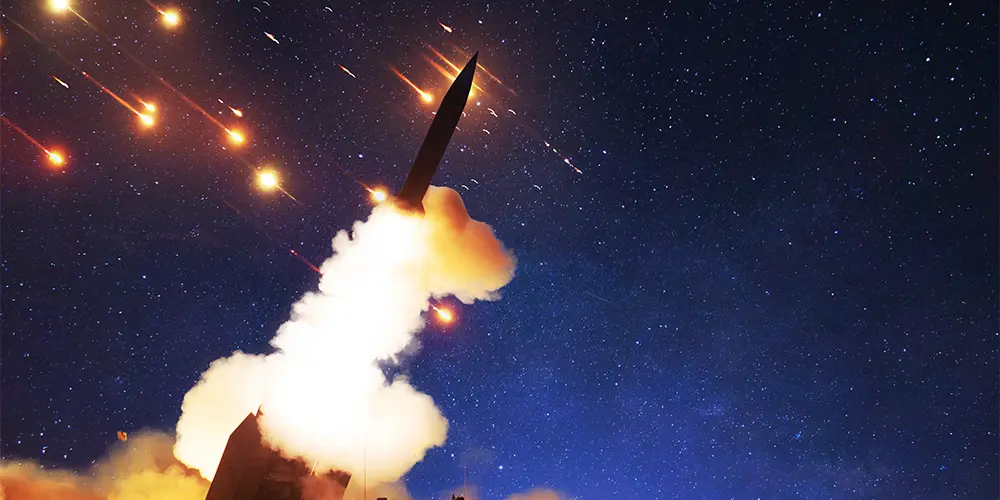
On 28 August, six months will have passed since the US and Israel launched joint strikes on Iran, triggering a prolonged, stop-start conflict that has reverberated through the global economy. The resulting trade chokepoint crisis, energy shock and fiscal-monetary squeeze have dramatically impacted geo-economics, fiscal balances and market dynamics, altering some of these fundamentally.
The new price of geography
The conflict’s most immediate economic effect has been on refined-fuel markets. Iranian strikes on Gulf energy infrastructure cut Middle Eastern refining capacity by 20%, previously 9.6m barrels per day. With Russian refining output also down 30% following Ukrainian drone strikes, global diesel and gasoline prices are likely to stay elevated, raising transport, manufacturing and household budget costs worldwide.
The larger shift, however, lies in the changing economics of geography. Iran has leveraged the Strait of Hormuz as a bargaining tool before, but this war has seen Iran operationalise and monetise this chokepoint. Daily vessel transits fell to an average of 10-13 between February and June, from about 125 before the war. Iran now charges $1 per barrel of oil, payable in renminbi or stablecoins – about $2m per fully laden supertanker. This arrangement shows no sign of ending even if the war winds down, and we may also see the same logic more readily applied to other trade chokepoints.
Above all, the conflict has reinforced how energy independence is both an economic and geopolitical asset. Energy-importing countries, like India, South Korea and Japan, have struggled with higher crude oil and liquid natural gas import bills. Developing Asia’s energy import bill is set to nearly double this year, to about $160bn.
By contrast, energy-exporting countries outside of the Middle East have benefitted from higher prices and redirected flows. US crude exports rose by 700,000bpd even as global seaborne product trade fell, and Canada has captured additional market share, exporting to Japan as Asian buyers diversify away from the Gulf. The war has already redrawn who wins and loses from energy trade, and the next six months will most likely sharpen that divide further.
Energy self-protection
Countries that built optionality have gained strategic advantage. Saudi Arabia’s East-West pipeline has let Riyadh bypass Hormuz and sustain exports via the Red Sea. The United Arab Emirates has maximised capacity on its Habshan-Fujairah pipeline to the Gulf of Oman and is building a new $3bn, 300km parallel line. The UAE’s exit from the Organization of the Petroleum Exporting Countries is further evidence that independence and flexibility are becoming strategic assets, reshaping economic-energy strategies well before the war ends.
China’s forward planning has paid off, too. Strategic reserves, swift export controls and lower crude imports let China draw down stocks instead of bidding up prices, shaving about $30 off global Brent prices between February and June. China even added crude to inventories in July, and its strategic petroleum reserves are now estimated at about 1.2bn barrels. Additionally, China’s push into a new Arctic trade route could offer further leverage, diversifying shipping away from Hormuz and the Suez Canal.
These moves suggest the war has accelerated a longer-term trend towards energy self-protection, one that will keep shaping investment decisions well beyond this conflict. The war has also extended forces already remaking the global economy: securitisation, trade withdrawal and weaponised interdependence, in which economic reliance and supply-chain integration – once powerful engines of growth and development – are exploited for influence.
The cost of protection
The conflict has worsened fiscal positions on two fronts, pushing spending up while making borrowing more expensive. More than 115 countries have adopted measures to cushion citizens from the war’s energy impact, with 94 governments introducing price supports such as fuel subsidies, price caps and tax breaks. Global fossil fuel subsidies are projected to hit $1.1tn in 2026, up from $700bn in 2025.
On top of this comes the acceleration of already‑rising defence budgets, as countries are reminded that they can’t rely on the US for security. European military spending already rose 14% in 2025 – the fastest pace since 1953 – and a similar dynamic is playing out among US allies in Asia such as Japan, South Korea and Taiwan, where military spending rose 8.1% in 2025. None of this spending is easily reversible – subsidies are politically painful to withdraw once introduced, and defence budgets rarely shrink once raised.
At the same time, financing conditions have tightened. Global headline inflation accelerated to 4.3% by March, from 3.7% in January, and the World Bank warned that the war lasting six months or more could push inflation as high as 4.5%, a threshold now well within sight. Many central banks, such as the European Central Bank and Bank of Japan, have already raised rates in response to war-driven inflation, while financial markets predict the Bank of England will raise rates this year, too.
Shocks to fertiliser and other agricultural inputs typically take longer to fully feed through to consumer prices due to planting cycles, creating a possible inflationary effect well into 2027. This pushes up the cost of borrowing at a moment when global public debt is at record levels – reaching nearly 94% of GDP in 2025. Much of that debt is about to reprice: a third of Organisation for Economic Co-operation and Development fixed-rate debt is set to mature between 2026 and 2028, as is 36% of outstanding bond stock across emerging market and developing economies. Refinancing at today’s rates will lock in higher borrowing costs for years to come.
Bonds worry, stocks don’t
Bond investors are understandably cautious: on 18 August, the 30-year Treasury yield hit its highest level since 2007, at 5.3%, prompting a Treasury intervention that signals both bondholder and government concern over war-driven inflation and debt sustainability. Until recently, longer-dated bonds were reacting less severely than in previous market shocks such as the 2022 Covid-inflation surge and 1970s stagflation. In emerging markets, higher US yields and a strong dollar raise the cost of servicing dollar-denominated bonds, while commodity and energy importers face wider current account deficits on top of it.
Equity investors have read the same six months and drawn the opposite conclusion. Although volatile, US investors are betting on diplomacy and artificial intelligence-driven earnings, and the market rallied near an all-time high over 3-4 August. European markets are back in favour, too, helped by an economy that has withstood the war better than expected, clearer central bank guidance and limited AI exposure, which makes up just a 10th of the STOXX 600.
While the stock market often moves separately from the real economy, the Iran war has sharpened this divergence: equities have rallied on ceasefire hopes and AI-driven earnings, even as energy costs, inflation and fiscal deficits worsen. On several occasions, most recently on 7 August, the Trump administration’s hints of a possible deal with Iran drove down oil prices and sent stocks soaring, underscoring markets’ optimism and sensitivity to geopolitical signalling.
This war-driven volatility has amplified AI-related global credit risks as tech valuations run ahead of uncertain returns. Investors are getting rich on paper, but the divergence between financial wealth and real economic performance is a growing source of systemic risk.
The bottom line
Six months in, this conflict has made the global economy more expensive, less integrated and more security-driven. Energy independence and supply-chain flexibility now matter as much as efficiency, while rising debt and borrowing costs expose the limits of governments’ ability to absorb future shocks.
The gap between buoyant equity markets and the fiscal and energy strain building beneath them is unlikely to close painlessly, and a more nationally orientated and less multilateral world may leave fewer governments inclined towards the coordinated responses that softened past crises. A military intervention that had initially promised to last two to three weeks has already reshaped the global economy, with costs felt well beyond the six-month mark.
Jessica Pretorius is a Programmes Coordinator at OMFIF.
This article will appear in the next edition of the OMFIF Bulletin, publishing 2 September. Register to receive it in your inbox.

Interested in this topic? Subscribe to OMFIF’s newsletter for more.