
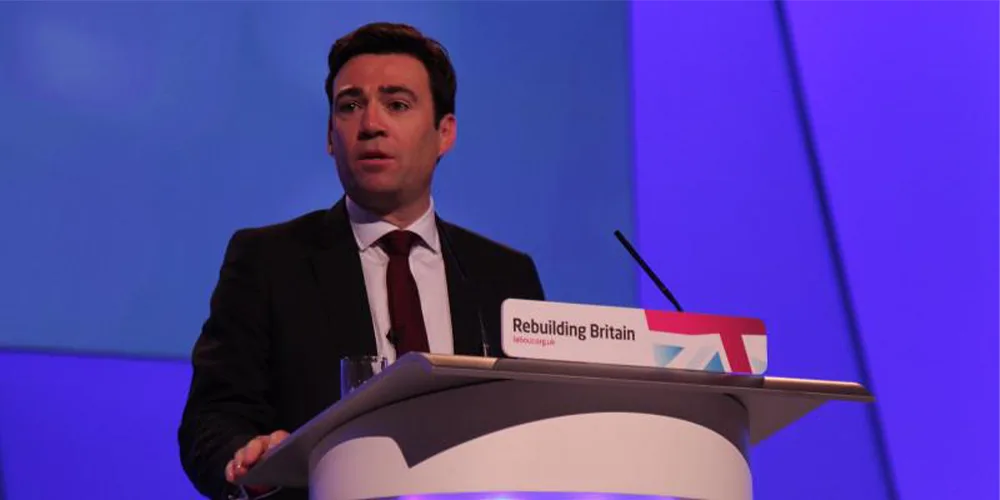
Andy Burnham, the newly elected member of parliament for Makerfield, has identified a real problem. It does not mean he has a credible economic strategy.
The appeal of ‘Manchesterism’ is that it speaks to a frustration voters understand. Britain’s essential systems are too expensive, too fragmented and too underinvested. Public money is spent compensating households for failure rather than fixing the systems that produce it.
Burnham’s answer is public control, local accountability and a state willing to shape the supply side. Britain has had public ownership before, and it has also had underinvestment, political interference, weak maintenance and poor capital discipline.
Nationalisation can move liabilities on to the public balance sheet without improving the quality of the assets behind them. Bringing assets under public control may make political sense in some sectors. But the bond market will ask whether the state can turn control into capacity, capacity into revenues and revenues into fiscal credibility.
That is the real test. If Britain wants a more productive state, it needs a balance sheet.
Britain spent the depreciation dividend
Britain’s central economic pathology is that the country failed to maintain, renew and govern the asset base on which growth, public services and fiscal credibility depend. It privatised utilities and sold public real estate. It leased back assets it once owned. It underinvested in housing, transport, water, energy and digital infrastructure. It treated asset sales as fiscal improvement even when they weakened public net worth.
Britain did not only spend the peace dividend. It spent the depreciation dividend.
The UK’s fiscal rules are often presented as prudence. In reality, they are a narrow and sometimes misleading test.
A serious fiscal framework should include public net worth. Public net worth is not a licence to borrow without limit. Debt, deficits and debt-service costs remain essential constraints. But they should be complemented by a measure that asks whether policy is strengthening or weakening the public balance sheet.
This matters for markets and it matter even more for future generations. Bond investors do not look only at debt ratios; they ask what stands behind the debt. A state that borrows while neglecting its assets and hiding its liabilities is not in the same position as one that borrows to build productive capacity and manages its public wealth professionally.
The state therefore needs to manage both sides of its balance sheet. Hidden assets are an opportunity. Hidden liabilities are a threat.
The asset side
The UK already has fragments of a public wealth system. But the result is not a coherent public wealth architecture. Past efforts have too often been shaped by estate rationalisation rather than value creation.
A serious public wealth institution would ask different questions: what could the public portfolio become? Which assets belong together? Where does development optionality exist? How can the public owner retain part of the upside rather than transfer it through fire sales or poorly structured partnerships?
This requires more than better coordination between existing bodies and professional public ownership.
At the national level, Britain needs a holding company for commercial assets owned by central government. At the city level, major urban portfolios should be placed in urban wealth funds or city holding companies. Where large asset owners have enough scale, sectoral or segmental holding companies may be the right answer.
The first step is an asset map: a rapid economic exercise to reveal fair market value, current use, opportunity cost, development optionality and the institutional structure best suited to each portfolio. Unlike an asset register, which tells government what it owns, an asset map tells government what those assets could become.
In many cities, the state itself is a major landowner – controlling land around stations, depots, utilities, hospitals, schools, housing estates, transport corridors and civic buildings. Seen separately, these sites look like operational leftovers. Seen together, they are the land base for housing and infrastructure.
Fragmented ownership makes development worse. A public owner with a stake in the whole area can provide parks, streets, public realm and better design because the value created is reflected across the wider portfolio.
London’s King’s Cross is proof that public assets can help create extraordinary value when placed in an arm’s-length structure capable of taking professional decisions and partnering with other owners. But it also shows the weakness of under-capitalised public ownership: if the public vehicle cannot remain properly exposed to the development upside, too much value can be transferred away from the public sector.
The lesson is not that Britain cannot do this. It is that the UK public sector has not institutionalised the capability.
Transport for London controls strategic urban real estate around stations, depots, interchanges and corridors. Earlier external work has suggested that TfL’s reported property holdings of around £17bn to £21bn may capture only part of a much larger estate, with some estimates putting the full urban portfolio much higher. The current accounting does not reveal fair market value, highest and best public use, or recurring revenue potential.
That is why an asset map matters. No one should assume that TfL can suddenly generate returns across its entire estate. But even if a portion of its portfolio were professionally mapped, pooled, developed and managed, the implications for housing, investment capacity and recurring non-tax revenue could be substantial.
The liability side
The UK has substantial liabilities that sit on the public balance sheet but are largely ignored in fiscal rules. These liabilities will need to be paid just as surely as government debt. The stock of non-debt liabilities also grows each year, most importantly through pension entitlements earned by public-sector employees.
The four largest pay-as-you-go public-sector pension schemes had total liabilities of around £1.1tn in 2024-25, equivalent to more than a third of gross domestic product. The balance-sheet valuation of these liabilities is volatile because it moves with gilt yields. Higher yields reduce the accounting value of the liabilities, even though they are bad for public finances as a whole.
But the deeper issue is that the future entitlements are increasing each year without proper recognition in fiscal policy.
In 2024-25, the four large schemes accrued around £35bn of incremental liabilities, or about 1.2% of GDP. Yet because contributions exceeded payouts, they generated a cash surplus of around £3bn. In cash terms, the schemes appear to help the fiscal position. In economic terms, the state is accumulating future obligations inherited by future taxpayers.
A true current balance would require pension accruals to be funded from current income and it would not sit easily with politicians seeking to avoid tax increases or spending cuts.
But there is an upside. If future accruals were funded and invested in a public liabilities fund, the long-term impact on public finances could be substantial.
Investment returns would be volatile and the institutional discipline would need to be strong. There would be down years. But sovereign funds from Norway to Singapore show that patient, diversified, professionally governed public investment institutions can manage long-term liabilities and assets without becoming political slush funds.
The UK already insists that private-sector defined-benefit schemes recognise and fund pension promises. It should apply similar balance-sheet discipline to itself.
A public wealth architecture
The productive state cannot be built on invisible assets and unfunded promises.
Britain needs a public wealth architecture: a national holding company for urban wealth funds for major city portfolios; sectoral vehicles which require specialist management; and a public liabilities fund to invest cash equivalent to future pension accruals.
Together, these institutions would do what current fiscal rules fail to do. They would make the state a better credit. This is the serious version of ‘Manchesterism’.
Burnham is right that Britain’s essential systems are failing. But the answer is not simply more public control. Britain has tried that before. Public control without stewardship will not reassure voters, the Treasury or the gilt market.
Do not ask whether ‘Manchesterism’ sounds radical. Ask whether it makes Britain’s institutions capable of turning control into capacity and capacity into solvency.
That is how to make a productive state work.
Dag Detter is Principal of Detter & Co. and John Crompton is investment banker and former HM Treasury official and advisor.

Image credits: Labour North West
Interested in this topic? Subscribe to OMFIF’s newsletter for more.