
Dealt a tough hand and managing a group that has lost its way, South Africa has run its G20 presidency admirably in 2025.
G20 leaders first came together amid the 2008 financial crisis and it has been downhill since then. The group has been riven by Russia’s invasion of Ukraine starting in 2014, European introversion in the euro area crisis, China’s shift to greater authoritarianism, poor performance among Brics countries, tensions between the US and China and US President Donald Trump’s aversion to multilateralism.
If the 2008 financial crisis conjured up Samuel Johnson’s famous quip – ‘when a man knows he is to be hanged in a fortnight, it concentrates his mind wonderfully’ – the world afterwards did not face similar catastrophe, except briefly during the pandemic.
The G20 has become increasingly bureaucratic and unwieldy as more topics piled onto agendas and new working groups sprouted. This year’s sherpa track has 15 working groups, while the finance track has seven technical groups and three task forces. There are countless ministerial meetings – even for space economy ministers. Previous summit chairs delivered little.
That was South Africa’s inheritance. The authorities have worked diligently to create a successful summit in Johannesburg on 22–23 November. But the theme of ‘Solidarity, Equality, Sustainability’ was hardly going to excite. South Africa has been unfairly and shamefully maligned by the Trump administration.
With the US assuming the G20 presidency in 2026, one might legitimately ask whether the G20 has any future at all. But perhaps there is a silver lining.
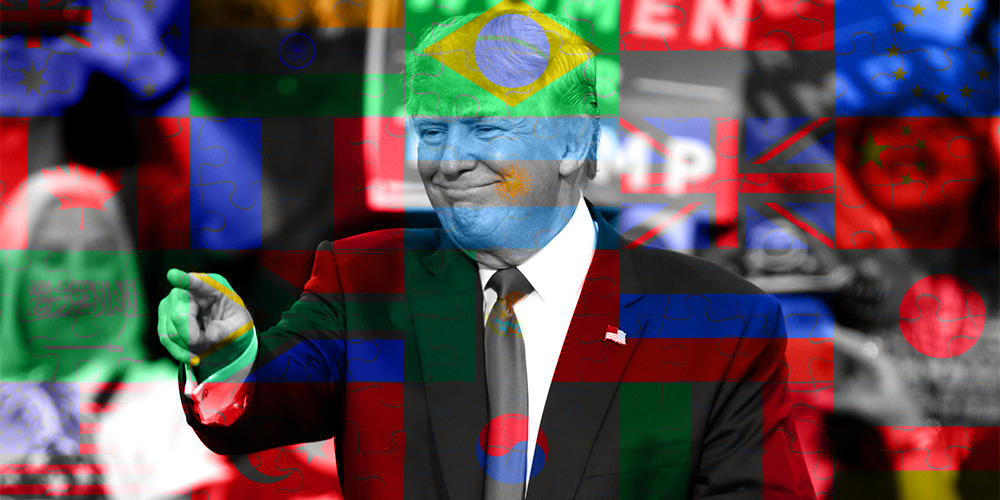
The G20 realistically cannot function well if the world’s largest economy is a bystander. Trump appears interested in showcasing the US in 2026, particularly its 250th anniversary, and at his Miami resort. A Trump G20 presidency will have to apply elbow grease, tone down its rhetoric and take others’ views into account. It is not in China’s interest to turn its back on a US chair.
A focused and small 2026 G20 agenda, aligned with US interests, is there for the taking.
Streamlining and playing to strengths
The US rightly wants to claw back the sprawling G20 agenda and get back to basics. Fewer people are needed at the table rather than the now 21 members (with the African Union) plus eight guest leaders, not to mention the many heads of international organisations. Work should be concentrated more heavily in the sherpa and finance tracks, as when G20 summits began.
The G20 should dispense with a vast number of ministerial meetings, working groups and task forces. Leaders would still meet once a year, finance ministers could gather on the margins of the semi-annual meetings of the International Monetary Fund and World Bank. The sherpa track could combine work on trade, development and energy and dispense with the rest, while the finance track could merge the framework and international financial architecture working groups and let the Financial Stability Board lead on financial sector issues.
Global imbalances were at the heart of the original G20 leaders’ summit in 2008, including the refrain against trade protectionist measures. They were emphasised anew in US Treasury Secretary Scott Bessent’s speech on international financial institutions in April 2025. The US sees such imbalances as focusing on China’s distorted growth model, surpluses and overcapacity. That is legitimate. But the US is in denial about its fiscal recklessness. Others will not avert their eyes. Global imbalances remain a helpful way to frame global economic and trade discussions.
Many emerging market and developing countries face unsustainable debt. While this can be due to poor country performance, it is often associated with excessive and opaque lending from the official and private sectors. A US presidency could lead in promoting greater debt transparency and retooling IMF-World Bank debt sustainability frameworks to help low-income countries dig their way out of unsustainable debt and debt service burdens.
When it comes to innovation, including financial innovation, the US has a strong interest in reducing red tape and boosting potential growth. The rest of the G20 is keen on strengthening productivity and tackling structural reforms. Given increased global attention to cryptocurrencies, stablecoins and central bank digital currencies, financial innovation could complement a US-led G20 innovation agenda.
And on energy security and climate, energy access is key to the G20’s future economic security. The Trump administration is interested in an all-of-the-above energy approach, including renewables and nuclear energy. Other G20 members are strongly focused on climate and sustainable finance.
At a time of centrifugal global geopolitics, G20 members still face common economic challenges. They have a collective interest in keeping an efficient streamlined machinery in place, especially for readiness when the next crisis hits.
Against all odds, if Trump takes the US presidency seriously, the G20 could restore some of its mojo. Is the Trump administration willing to seize the opportunity?
Mark Sobel is US Chair of OMFIF.
This is an edited version of an article published by The Global Governance Project and the G20 Research Group, in ‘G20 South Africa: The 2025 Johannesburg Summit’.

Image Source: Gage Skidmore
Interested in this topic? Subscribe to OMFIF’s newsletter for more.