
Money Disrupted: The global macroeconomic effects of the Iran war
Money Disrupted is a monthly roundtable series examining how economic fragmentation, geopolitics and technological change are reshaping the global monetary order. With increased questioning of long-standing assumptions on reserve currencies, central bank independence, capital flows, sovereign debt, inflation control and cross-border liquidity, this series provides a timely forum for discussing the future of money and markets.
Each meeting convenes senior representatives from public financial institutions, commercial banks, asset managers and academia from across OMFIF’s global network. Themes include the future of the dollar system and reserve diversification, central bank credibility, the effectiveness of monetary policy tools, reserve management in a fragmented world, sovereign debt dynamics, the evolving digital economy and financial stability amid a shifting risk landscape.
Escalating tensions around the Strait of Hormuz – a critical artery for global energy flows – are injecting renewed volatility into oil and gas markets and heightening risks to inflation, growth and financial stability. In an environment of fragile disinflation and diverging monetary policy, energy price shocks risk complicating central bank decisions and straining fiscal positions, particularly in energy-importing economies.
This roundtable assesses the macroeconomic implications of rising geopolitical risk in this vital corridor, including the impact of supply disruptions, price uncertainty and shifting trade routes on energy markets, capital flows and currencies. A key focus is the role of multilateral development banks as stabilising actors during periods of stress.
Participants explore how MDBs can deploy counter-cyclical financing, risk-sharing tools and policy support to cushion shocks, support vulnerable economies and mobilise private capital. The discussion also examines how enhanced co-ordination can strengthen crisis response and long-term resilience.
Speakers

Andrea Correa
Head of Research
OMFIF
Andrea Correa
Head of Research
OMFIF
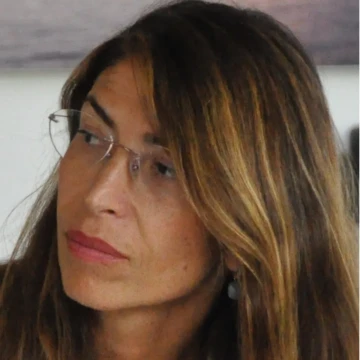
Barbara Marchitto
Head of Country and Financial Sector Analysis
European Investment Bank
Barbara Marchitto
Head of Country and Financial Sector Analysis
European Investment Bank
Barbara Marchitto is the Head of Country and Financial Sector Analysis at the Economics Department of the EIB. In her role, she leads analytical work to support the Bank’s operations and economic surveillance in countries of operations outside the EU. She is responsible for a broad range of macroeconomic and financial sector analyses, spanning from sovereign and banking industry risk ratings, macroeconomic scenarios and country diagnostics, including through the analysis of bank and firm level data. Barbara’s main areas of interest have recently encompassed financial sector development and access to finance as drivers of inclusive growth. She oversees the publication of several country and regional reports. Prior to joining the EIB, Barbara has held positions at the International Monetary Fund and the Italian Ministry of the Economy and Finance. She holds a PhD in Economics from the University of London and an honours degree in Economics from Bocconi University, Milan.
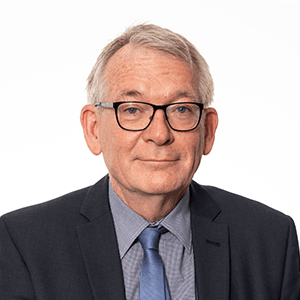
David Marsh
Chairman
OMFIF
David Marsh
Chairman
OMFIF
David Marsh is Chairman and Co-Founder of OMFIF. Before starting at OMFIF in late 2009, he worked for City merchant bank Robert Fleming, corporate finance boutique Hawkpoint, German management consultancy Droege and London investment firm London & Oxford. Marsh took over the chairmanship from John Plender on 1 January 2018 having been Managing Director since 2014. He moved to a non-executive role following John Orchard’s appointment as Chief Executive effective 1 January 2020.
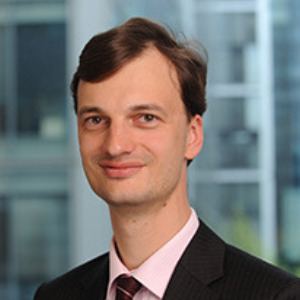
Alexander Plekhanov
Director for Transition Impact and Global Economics
European Bank for Reconstruction and Development
Alexander Plekhanov
Director for Transition Impact and Global Economics
European Bank for Reconstruction and Development

Mark Sobel
Vice Chair and Chief Economist
OMFIF
Mark Sobel
Vice Chair and Chief Economist
OMFIF
Mark Sobel is Chief Economist and Vice Chair at OMFIF. Mark is a veteran US Treasury official, who was at the forefront of international financial diplomacy for two decades.
Mark, who represented the US on the International Monetary Fund executive board up to April 2018, has had a 40-year Treasury career with extensive around-the-world engagement.
He works with OMFIF in dealings with private and public sector organisations, speak regularly on international and US policy, and provide OMFIF members with insight and analysis.
Mark was Treasury Deputy Assistant Secretary for international monetary and financial policy between 2000 and early 2015. He helped lead Treasury preparations for G7 and G20 finance minister and central bank governor meetings, formulated US positions at the IMF, and coordinated Treasury and regulatory agencies’ work in the Financial Stability Board.
Mark founded the US/EU Financial Market Regulatory Dialogue and chaired an international group of private and official sovereign debt experts that developed enhanced collective action clauses for sovereign debt restructuring. He managed the $100bn-plus Treasury Exchange Stabilization Fund and played a key role in US foreign exchange policy including coordinating the Treasury’s semi-annual foreign exchange report on China and other countries.

Christopher Smart
Managing Partner
Arbroath Group
Christopher Smart
Managing Partner
Arbroath Group
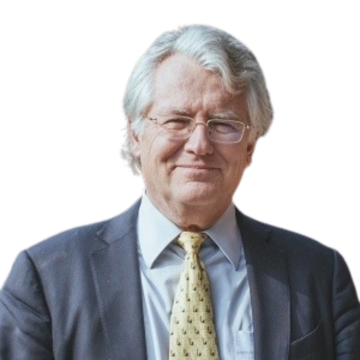
Jörg Wuttke
Partner
Albright Stonebridge Group
Jörg Wuttke
Partner
Albright Stonebridge Group