The future of banking: Innovation, stablecoins and the challenge of AI with support of Rokos Capital Management

The roundtable examines the regulatory outlook for stablecoins and public blockchains, the development of tokenised financial infrastructure and the convergence of banking and technology. The discussion also considers the role of Big Tech and hyperscalers, how banks can scale AI in regulated environments, the implications of cloud concentration and the global push for AI sovereignty.
The Future of Banking series, in collaboration with Rokos Capital Management, brings together senior representatives from banking, regulation, policy and investment, including central banks, sovereign wealth funds, pension funds, banks, ratings agencies and technology providers, to examine the future architecture of commercial banks in an age of technological change, interconnected capital markets and increased competition between regulatory systems.
The first roundtable, ‘Europe’s strategic banking challenges’, takes place in London on 1 October. The second, ‘Financial market innovation, AI and the changing shape of banking’, takes place in New York on 17 November.
These discussions are interactive, with all delegates invited to contribute, and are held under the Chatham House Rule in an off-the-record format. After each event, OMFIF will produce a publication summarising the conclusions reached.
Speakers
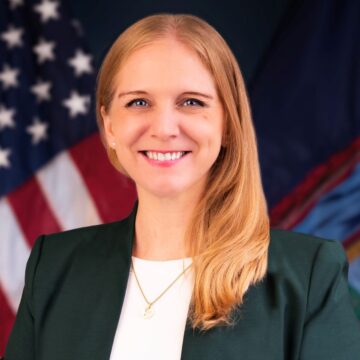
Kaitlin Asrow
Acting Superintendent
New York State Department of Financial Services
Kaitlin Asrow
Acting Superintendent
New York State Department of Financial Services
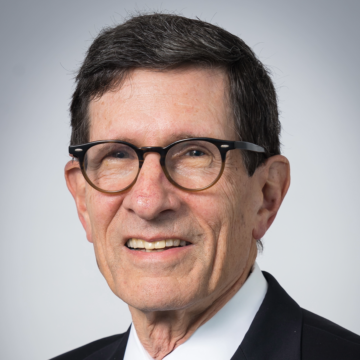
Richard Berner
Clinical Professor of Finance and Co-Director of the Stern Volatility and Risk Institute,
NYU Stern School of Business
Richard Berner
Clinical Professor of Finance and Co-Director of the Stern Volatility and Risk Institute,
NYU Stern School of Business
Richard Berner is clinical professor of management practice and finance at the NYU Stern School of Business. He is also co-director of the Volatility and Risk Institute. Previously, he served as the first director of the Office of Financial Research and was counsellor to the Secretary of the US Treasury. He has also chief economist at Morgan Stanley, Mellon Bank, Salomon Brothers, Morgan Guaranty Trust Company and the Board of Governors of the Federal Reserve System. He is a current member of the Market Risk Advisory Committee at the Commodity Futures Trading Commission, the Milken Fintech Advisory Committee and the Bretton Woods Committee.
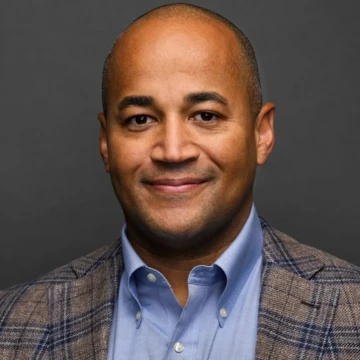
Dante Disparte
Chief Strategy Officer, Head of Global Policy
Circle
Dante Disparte
Chief Strategy Officer, Head of Global Policy
Circle

Yazmin Hiraoka
Senior Principal Product Manager, Digital Assets
Oracle
Yazmin Hiraoka
Senior Principal Product Manager, Digital Assets
Oracle

Carole House
Nonresident Senior Fellow, GeoEconomics Center
Atlantic Council
Carole House
Nonresident Senior Fellow, GeoEconomics Center
Atlantic Council
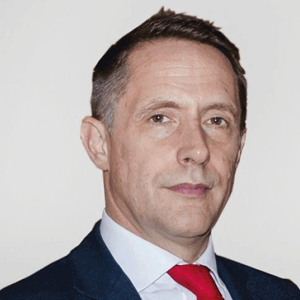
John Orchard
Chairman, Digital Monetary Institute
OMFIF
John Orchard
Chairman, Digital Monetary Institute
OMFIF

Mark Sobel
Vice Chair and Chief Economist
OMFIF
Mark Sobel
Vice Chair and Chief Economist
OMFIF
Mark Sobel is Chief Economist and Vice Chair at OMFIF. Mark is a veteran US Treasury official, who was at the forefront of international financial diplomacy for two decades.
Mark, who represented the US on the International Monetary Fund executive board up to April 2018, has had a 40-year Treasury career with extensive around-the-world engagement.
He works with OMFIF in dealings with private and public sector organisations, speak regularly on international and US policy, and provide OMFIF members with insight and analysis.
Mark was Treasury Deputy Assistant Secretary for international monetary and financial policy between 2000 and early 2015. He helped lead Treasury preparations for G7 and G20 finance minister and central bank governor meetings, formulated US positions at the IMF, and coordinated Treasury and regulatory agencies’ work in the Financial Stability Board.
Mark founded the US/EU Financial Market Regulatory Dialogue and chaired an international group of private and official sovereign debt experts that developed enhanced collective action clauses for sovereign debt restructuring. He managed the $100bn-plus Treasury Exchange Stabilization Fund and played a key role in US foreign exchange policy including coordinating the Treasury’s semi-annual foreign exchange report on China and other countries.
Timings
Timings
15:30 – 16:00: Arrivals and refreshments
16:00 – 17:30: Roundtable discussion
Regulatory outlook – public rails and stablecoins
- The implementation of different stablecoin regimes (MiCA and GENIUS) and the implications for banks
- Reconciling the tension between state and federal oversight and the operational realities for stablecoin issuers and banks
- How banks can safely utilise public, permissionless blockchains while satisfying strict regulatory mandates
Tokenisation and the future plumbing of financial markets
- The growth of bank-proprietary DLT networks and whether these platforms will persist or consolidate
- The benefits around enhanced intraday collateral mobility and liquidity optimization
- Navigating digital custody rules, Basel capital charges, and tokenised cash settlement leg
Big Tech, hyperscalers and the convergence of banking and technology
- The reality of scaling generative AI and machine learning in highly regulated environments
- The regulatory and operational implications of cloud concentration in global systemic banks
- Geopolitics and the global push for AI sovereignty in the wake of ‘Mythos’
17:30 – 18:30: Reception drinks
With support of