
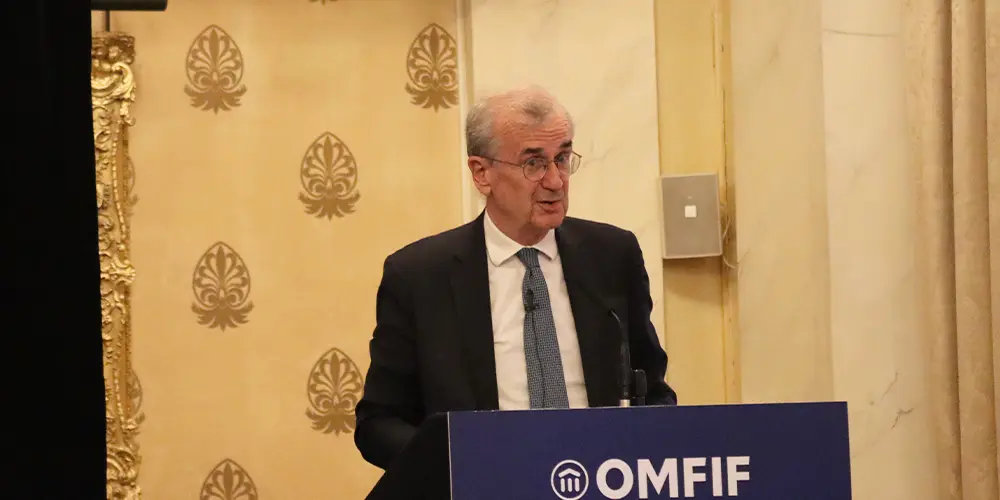
This is an edited version of a speech delivered at the London School of Economics and Political Science.
In considering the last 11 years as governor of Banque de France, it would be tempting – and not wrong – to sum them up in a simplistic way: despite rising and unprecedented geoeconomic turmoil, central banks so far have been broadly successful in maintaining price stability and financial stability.
But many things changed below this surface. To give an updated vision and improve monetary clarity, I think we need to discuss two issues in depth: who is at present in the driver’s seat? And what are the four new challenges facing central banks?
Who is in the driver’s seat?
At present central banks’ dominance is challenged, and some powerful voices promote the idea that governments, or more recently and subtly, financial markets, should be in the driver’s seat.
Starting in the US, central banks are facing a growing challenge to their independence. The populist critique is today the loudest, but also the least relevant. Central banks are portrayed as technocratic institutions, escaping democratic control and sacrificing employment and growth on the altar of price stability.
Allow me to respond with a double ‘no’. No, independence is not a democratic anomaly. Attacking it in contradiction with the law is what is dangerous for democracy. And no, independence is not an obstacle to reasonably low interest rates; on the contrary, it is a precondition for them, by making it possible to durably control inflation close to its 2% target.
Monetary policy has evolved over the past 10 years: alongside the traditional channel of credit demand, another decisive channel has emerged – that of expectations. In a more uncertain world shaken by repeated shocks, the effectiveness of monetary policy relies increasingly on the ability of central banks to anchor inflation expectations, that is, on their credibility in the eyes of households and firms. Weakening central bank independence therefore also means weakening one of the key foundations of price stability.
The four new challenges facing central banks
After the successful disinflation of 2024-25, there is an obvious short-term challenge for the euro area as well as for the UK: how to face the negative supply shock of the Middle East conflict, leading to both higher inflation and slower growth?
But there are four more structural challenges: 1. How to combine agility and predictability. 2. How to communicate and steer inflation expectations in an era of distrust and social networks. 3. Whether central banks should start caring about money again. 4. And how to preserve the value of nonconventional tools.
1. How to combine agility and predictability
Central banks are not condemned to navigate between ‘being on autopilot’ or flying blind. It’s time to return to an intermediary concept, the central bank reaction function, close to what European Central Bank President Christine Lagarde called ‘framework guidance’ in Sintra. Central banks need to clarify not what they will do, but how they think and will act in a readable way.
This means at least three simple truths: they have a firm medium-term orientation to the 2% target, but are not obliged to rush to come back to it in short notice; they look to trends, and not only data points; they may therefore look through volatile price movements like energy but focus much more on underlying inflation and possible second round effects.
One significant improvement in agility, formed through geoeconomic turmoil and uncertainty, is the broader use of economic scenarios. By design, it makes the conditionality of policy impossible to miss, and it has other obvious benefits, such as testing the robustness of policy and better anticipating tail risks.
2. How to communicate inflation expectations in an era of distrust
Contrary to a long-prevailing approach by which central banks communicated only with financial specialists, they now have to speak to all economic agents, including the general public. A better understood monetary policy is a more effective one. Over the last decade, the Banque de France and the Eurosystem have made considerable progress in this area.
But then come two more difficult questions. First, inflation expectations by households are not completely rational and not steered only by central bank commitment. Recent Banque de France research shows that inflation expectations in the euro area (at the one-year horizon) are correlated to the actual perception of inflation, and this perception significantly overstates the real figure of inflation.
Second, central banks still communicate through traditional media, towards which distrust has increased. Central banks need to invent new channels to reach all audiences, including younger ones, by making greater use of social media, content creators or chatbots.
3. Should central banks start caring about money again?
At Jackson Hole, Federal Reserve Chair Kevin Warsh said: ‘Money matters. It’s not fashionable these days… but we should pay attention to money created by the central bank, and money that comes from the banking and financial systems.’
The last two decades have seen the gradual death of pure ‘monetarism’ – i.e. the steering of monetary aggregates as a key pillar of monetary policy. The ECB abandoned it explicitly in its strategy review of 2025, and implicitly much earlier. For a long time, we have seen a decoupling between the evolution of aggregates and inflation, due among other factors to the instability of the velocity of money and technological innovations.
But money matters for central banks in another way: technological disruption could significantly change the nature of money. The media’s buzz is about cryptocurrencies. They have huge potential to improve complex cross-border payments, and the Fed will have to decide soon how to incorporate them in monetary aggregates. Yet, they also carry potential contradictions and some threats: privatisation and the increased ‘Americanisation’ of money – more than 99% of global stablecoins are issued in dollars by private players; the fragmentation of payments; and greater financial instability.
The ECB’s strategy is an appropriate combination of three components. First, to lead by sovereign innovation in the form of a central bank digital currency. Second, to promote private innovation from European banks and in euros. And third, to promote international co-operation to avoid ‘innovative fragmentation’.
4. How to preserve the value of non-conventional instruments
Until 2021-22, there was a consensus that non-conventional instruments had become part of the regular – almost conventional – monetary toolkit. Since then and amid the recent inflation surge, this consensus has weakened. The view has gained traction that their costs – beyond the financial losses they caused for central banks themselves – had been underestimated. Some suggested that they bore some responsibility for the return of inflation. The latter is simply false. Inflation resulted from the sequence of two opposite shocks – the Covid-19 pandemic, then the Russian invasion of Ukraine, both of which were totally unpredictable.
In my view, this debate deserves a less Manichean approach. First, because the use of non-conventional instruments depends on circumstances. Second, because the different instruments must be assessed separately. If we do so, a clear hierarchy emerges.
Greater caution is needed regarding two overreaching instruments: forward guidance, and negative interest rates. Negative nominal interest rates are poorly understood and potentially destructive of ‘moral cohesion’.
The clearest contribution lies in balance-sheet instruments. Asset purchase programmes and long-term refinancing operations were designed in crisis times when conventional tools were constrained by the effective lower bound. We should, however, better distinguish their objectives: either to preserve an effective monetary policy transmission when specific market segments were under strain (equivalent to financial stability purpose), or to provide additional policy space when required, especially at the ELB (i.e. monetary stance purpose).
Uncertain and unpleasant times
Let me conclude with one of the most famous French philosophers. Voltaire was obviously not a specialist of monetary policy, but he wrote about three centuries ago: ‘Uncertainty is not a pleasant condition, but certainty is ridiculous.’ We live in uncertain and unpleasant times. To preserve stability and trust, we need independent central banks in the driver’s seat more than ever – nimble, humble and accountable ones.
Combining agility and predictability, communicating in an era of social media and dealing with new forms of money is more art than science, open pragmatism than theoretical rigidity. But I am confident that the central banking community, thanks to its trustworthy co-operation and its fruitful dialogue with economic research, will once more be up to the challenge.
François Villeroy de Galhau was Governor of the Banque de France from 2015-26.
This article is an edited version of a speech delivered at the London School of Economics and Political Science. Read the full version here.

Interested in this topic? Subscribe to OMFIF’s newsletter for more.