
The UK government has considered restricting the Office of Budget Responsibility to one main forecast a year. The motive is the unrealistic hope that abolishing the 50-year statutory obligation of the UK government to publish two official forecasts a year would reduce speculation about fiscal prospects and unwelcome pressure to take corrective action.
This is a vain hope. For decades ministers have been exasperated by constraints put on them by unwelcome official forecasts. Despite some occasions when ministers’ strictures have been valid, experience shows that their criticism of official forecasts have on balance not been justified and have contributed to greater mistrust of ministers’ motives. A clear and independent role for the OBR improves the debate on UK macroeconomic policy and leads to better policy decisions.
The real reason for pressure to change fiscal policy is not OBR forecasts, but the practice – begun by the previous government – of budgeting for a minute amount of fiscal ‘headroom’ within the fiscal rules. This demonstrates a preference for doing the minimum possible, which increases distrust in financial markets.
Reducing the frequency of forecasts by the OBR – which alone among forecasters has access to the experts within government with detailed knowledge of tax and expenditure policies – will increase suspicion that the government wishes to conceal bad fiscal news. It would backfire and increase unease in the bond markets.
The more effective way to improve decision-making would be to build in greater fiscal headroom by taking difficult decisions, particularly on pensions and benefits, where the OBR’s warnings on the long-term unsustainability of existing policies have so far gone unheeded.
1970s: a fraught relationship with forecasters
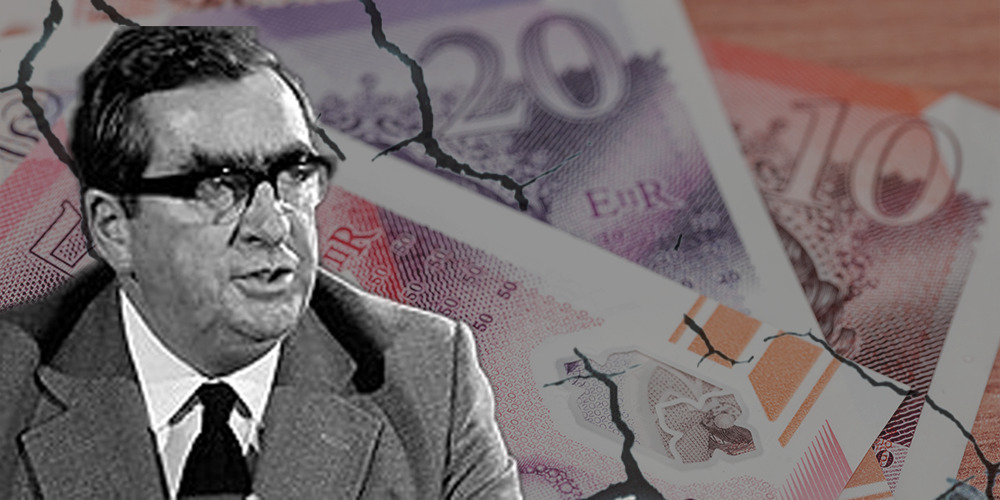
The 1975 Industry Act required the Treasury to publish two forecasts a year. This was fiercely opposed by Labour Chancellor of the Exchequer, Denis Healey, and senior Treasury officials. The Conservative opposition allied with some Labour backbenchers to force through the change. Future Chancellor Nigel Lawson later bitterly regretted his support for the change.
Healey had a fraught, sometimes abusive relationship with economic forecasters. He once said: ‘I decided to do for forecasters what the Boston Strangler did for door-to-door salesmen – to make them distrusted forever.’ He claimed that if he had been given accurate forecasts in 1976, he would not have needed to seek help from the International Monetary Fund.
This was at best self-deception as the official forecasts were not known outside government in the run up to the IMF application, which was made necessary by the continuous fall in the sterling exchange rate and the government’s increasing difficulties in borrowing both sterling and foreign currency.
Nevertheless, the Treasury forecasts in the late 1970s were often too pessimistic about the prospects for growth, a failing that the IMF team emphasised privately during the 1976 negotiations. However, after the IMF programme, Healey’s adjustments of the Treasury forecasts for publication displayed an unwillingness to face up to the negative consequences for growth and inflation of both the deteriorating position domestically, as the government’s incomes policies collapsed, and to the deteriorating position internationally with the second major oil shock of the 1970s – problems with which the incoming Conservative government had to grapple.
1980s: a pessimistic view
While assessing the position in a more measured way than Healey, Lawson made essentially the same criticisms of forecasts in general and of the undue pessimism of Treasury forecasts for output and inflation in the early years of the Margaret Thatcher government. He argued, correctly, that the Treasury forecasters made no real allowance for the effects of the emerging recession on inflation. Ministers overruled the very pessimistic Treasury view and forecast a 2.5% gross domestic product fall for 1980. (The Office for National Statistics’ historical GDP series has a fall of 2.1%.)
Subsequently, the dispute widened with 364 economists claiming in 1981 that ‘there is no basis… for the Government’s belief that by deflating demand they will bring inflation permanently under control and thereby induce an automatic recovery’. The subsequent sustained recovery following deflationary budgets further bolstered Lawson’s already formidable self-confidence. This was a factor – along with misleading official statistics – in his failure to recognise and control the ‘Lawson boom’ in the second half of the 1980s.
What neither Healey nor Lawson ever explained was how decisions on fiscal policy could be made, let alone explained in public, without publishing forecasts of their effects on the public finances and the economy more widely. Thereafter the system of two forecasts a year was never seriously challenged until the independent OBR was set up in 2010 with the widened and independent role for the forecasters codified.
2010s: a new-found independence
While the idea of independence for official forecasters would have horrified Healey and Lawson, the post-2010 arrangement has been a definite improvement on the previous system when the forecasting team was part of the Treasury trying to balance its roles as advisers to the chancellor and dispassionate forecasters.
It is right to review the OBR’s role and how its work is used in policy-making. As the IMF has clarified after some misunderstanding of its position, it is best practice to have two official forecasts per year. It is up to the government how it reacts to these.
Wanting one main fiscal event per year will require it to take bolder and probably more unpopular decisions to control fiscal policy. Even so it will not always avoid the need for mid-year corrections, particularly if there are external shocks. Any such within-year policy corrections – for instance following a rise in commodity prices – would best be taken at the time of the OBR mid-year forecast.
Finally, far from curtailing the role of the OBR by reducing the frequency of its forecasts, the government and MPs should take more seriously the OBR’s work on long-term fiscal trends. They should formally consider and react to the OBR’s annual fiscal sustainability reports. These assess policies beyond a five-year time horizon and demonstrate the unaffordable consequences of certain commitments, especially in the areas of pensions (the triple lock) and benefits.
Though facing up to the consequences of these policies may be unwelcome, it is a role that government and parliament should not evade.
Peter Sedgwick was a member of the Treasury macroeconomic team at the time of the IMF negotiations in 1976 and was head of the Treasury forecasting team from 1986-90. He was subsequently a Vice President of the European Investment Bank and Chair of the Guernsey Financial Stability Committee.
Join OMFIF on 1 December to discuss the latest outlook for the UK economy and public finances.

Image Source: Conspiracy Debunked
Interested in this topic? Subscribe to OMFIF’s newsletter for more.