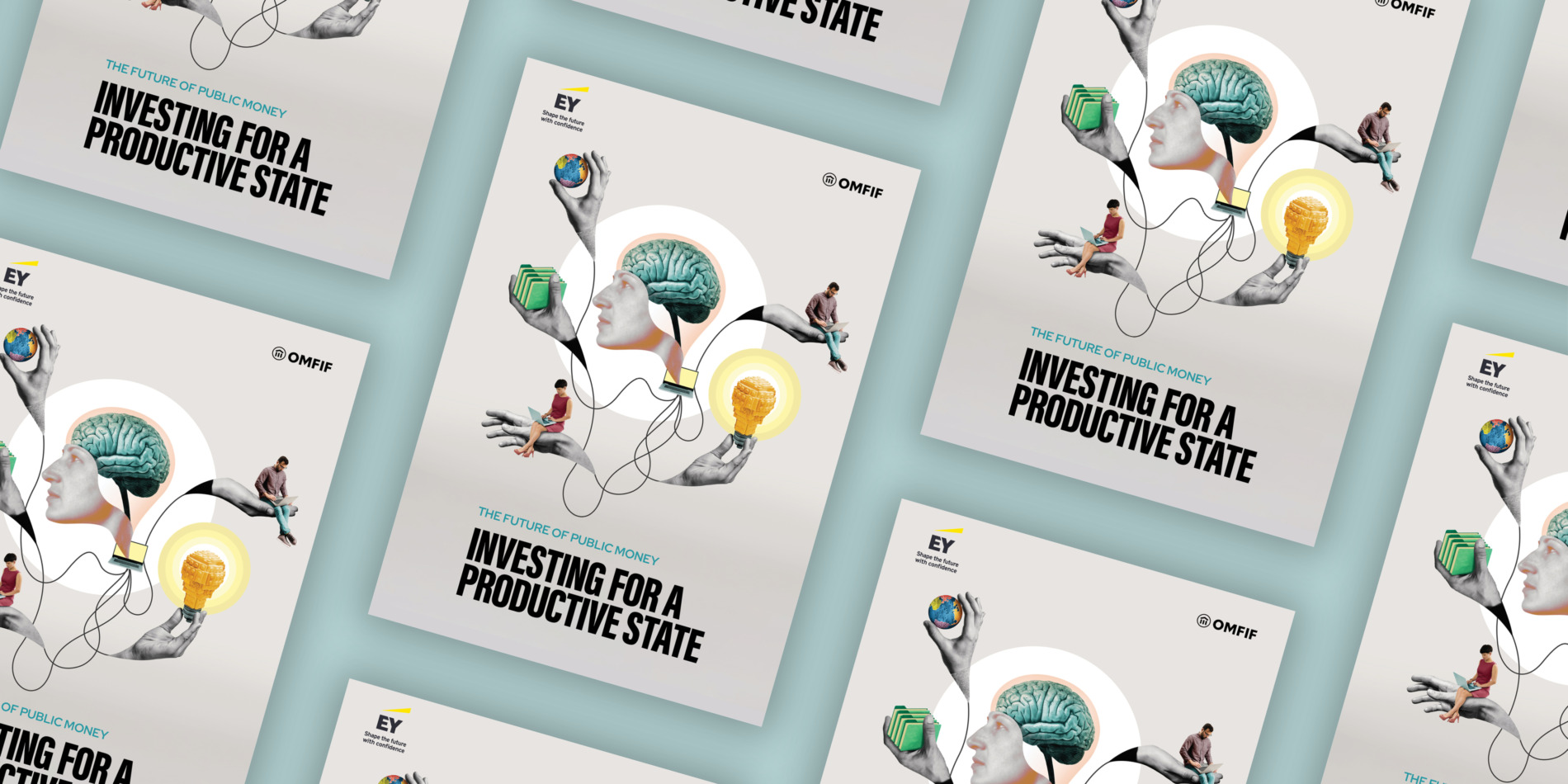
Investing for a productive state
We live in an era of fiscal constraint, where governments in advanced economies are facing increased demands from ageing populations, climate and security, while trying to manage higher debt levels. In this context, creating lasting public value becomes a fundamental challenge. Traditional measures of fiscal sustainability, focused on budgets, deficits and debt ratios, fail to capture whether government spending actually delivers impact for citizens and the broader economy.
A new report by OMFIF and EY, ‘Investing for a productive state’, puts forward a framework for fiscal effectiveness, focusing on public administration and direct service provision as the state's production function. This is the fourth instalment of the OMFIF-EY ‘The future of public money’ project.
In this new framework, we advocate for governments to measure value by linking expenditures to real-world outcomes. We encourage them to model scenarios of alternative allocations to assess investments that yield the highest returns, and mobilise capital through credible, accountable institutions to enable both public and private resources to be directed towards productive investments.
The report illustrates that the strategic allocation of public resources towards productive investments can simultaneously enhance growth, reduce debt and improve competitiveness.
Enter your details on the right to access the report.
Key findings:
- The empirical analysis of 10 western European countries demonstrates that redirecting, on average, 2.5% of gross domestic product to digital and technological capital over the next 30 years could generate $3 in GDP for every $1 invested.
- In addition, strategic allocation towards digital and technology investment can reduce debt-to-GDP ratios by 5% by 2036 and 8.6% by 2055, while also boosting productivity and fiscal competitiveness.
- Leveraging the advantages of demographic change and natural retirement attrition of the public-sector workforce can account for all required investment resources from labour to productive capital, ensuring a smooth transition without disruptive workforce cuts.
- Repurposing existing borrowing can support productive capital investment while maintaining fiscal discipline.
Partner