The future of public money: Defence investment for growth, resilience and innovation

Following the Defence forum 2026 earlier in the day, OMFIF and EY are convening senior representatives from governments, defence organisations, industry, institutional investors and financial institutions to examine how increased defence spending can strengthen long-term economic resilience, industrial competitiveness and technological leadership.
Building on ‘The future of public money’, a joint research initiative by OMFIF and EY established in 2022, the seminar explores how defence investment can drive innovation, industrial competitiveness and economic resilience. Discussions will examine the policy frameworks, financing models and public-private partnerships needed to accelerate the development, commercialisation and adoption of next-generation technologies, including artificial intelligence and other emerging defence capabilities.
Speakers
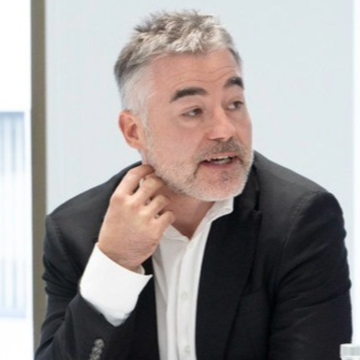
Oliver Cusworth
Senior Policy Adviser, Security and Defence Office
European Investment Bank
Oliver Cusworth
Senior Policy Adviser, Security and Defence Office
European Investment Bank
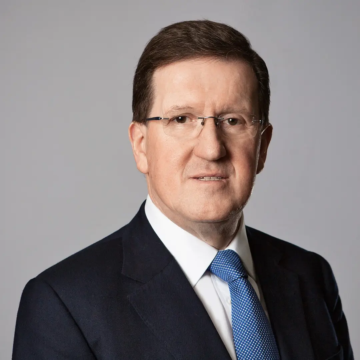
Lord George Robertson
Secretary General
NATO (1999–2003)
Lord George Robertson
Secretary General
NATO (1999–2003)

Rebecca Harding
CEO
Centre for Economic Security
Rebecca Harding
CEO
Centre for Economic Security

Luke Healy
Global Defence and Security Leader
EY
Luke Healy
Global Defence and Security Leader
EY

Robert Hercock
Visiting Fellow, Changing Character of Warfare Centre
Pembroke College, University of Oxford
Robert Hercock
Visiting Fellow, Changing Character of Warfare Centre
Pembroke College, University of Oxford

Valentina Ion
Government Solutions Strategy and Enablement Lead
Microsoft
Valentina Ion
Government Solutions Strategy and Enablement Lead
Microsoft

Mark MacDonald
Global Public Finance Management Leader
EY
Mark MacDonald
Global Public Finance Management Leader
EY
Mark is an advocate for the pursuit of a new vision of government fiscal policy, focused on a framework of public value that extends traditional components of public financial management. Through his day job as EY’s Global Leader, Public Money, he works with public and private sector leaders who similarly advocate that the future of public money must be different than its past. This exists at the convergence of fiscal requirement, technology advancement, market capability, and a sense that political economy is seeking new permission for lasting change.
Mark is a member of OMFIF’s Advisory Council and has worked on a series of research and advocacy pieces over the past several years, including work focused on application of innovative technology to public budgeting, continued pursuit of sustainable finance and the role of sovereign wealth and public equity, and our current focus on the Future of Public Money. Mark is the global sponsor and leader of EY’s blockchain-enabled solutions developed to enhance delivery of public value, with particularly powerful application in the development sphere working with global entities including the United Nations, the IMF, and the World Bank. He holds a Ph.D. in Public Policy, has 25 years professional experience advising public sector leaders, and maintains a positive belief that the pursuit of public value through markets and public institutions is a noble one.”

Aimie Stone
Chief Economist
ADS
Aimie Stone
Chief Economist
ADS
Trevor Taylor
Director, Defence, Industries and Society Programme
RUSI
Trevor Taylor
Director, Defence, Industries and Society Programme
RUSI
Timings
14:00 – 15:00: Session I: Driving growth, resilience and competitiveness
This discussion examines how governments can ensure that defence spending generates lasting economic value by strengthening advanced manufacturing, supporting high-skilled employment, improving supply-chain resilience and fostering innovation, while simultaneously delivering the military capabilities required in an increasingly uncertain geopolitical environment.
• How should governments evaluate defence spending as productive investment, and which metrics best capture its wider economic and strategic returns?
• How can defence investment strengthen competitiveness, advanced manufacturing, resilient supply chains and high-value employment?
• Which investments offer the greatest long-term economic multiplier effects?
• What policy frameworks can give businesses and investors the confidence to invest for the long term?
15:00 – 15:30: Fireside chat with Lord George Robertson, Chair, International Relations and Defence Committee, House of Lords; Secretary General, NATO (1999–2003)
15:30 – 16:00: Refreshments
16:00 – 17:00: Session II: Investing in defence innovation: AI, emerging technologies and future capability
This discussion explores how allied nations can finance, commercialise and scale next-generation defence technologies while strengthening Europe’s innovation ecosystem, reducing strategic dependencies and maintaining technological superiority in an increasingly contested global landscape.
• Which financing models are best suited to scaling AI, quantum, cyber and other emerging defence technologies?
• How can governments and investors better support defence technology companies from start-up to scale-up?
• What role can institutional investors, insurers and asset managers play in financing Europe’s future defence champions?
• Which AI capabilities should governments prioritise to strengthen military capability, competitiveness and resilience?
Sponsors