Eurosclerosis 2.0 in a changing world: from repetition to rupture
In this keynote talk, Pierre Wunsch, governor of the National Bank of Belgium, draws on his recent policy paper and argues that Europe is stuck in a Eurosclerosis 2.0 period: despite a long cycle of repeated ‘grand plans’, growth in the European Union has again fallen to very low levels, with a persistent innovation gap compared to the US and China. Wunsch asserts that the old European recipes – typically higher spending – no longer work in a world that has fundamentally changed, and that EU policy ambitions have broadened to the extent that they increasingly lead to internal conflicts, such as between climate targets and trade openness.
The inconvenient truth is that a deeper policy discussion based on a more realistic sense of Europe’s geopolitical importance and transparency about trade-offs, rather than a comforting narrative of ‘Europe-can-do-it-all’, is necessary to explore ways out of Eurosclerosis. He illustrates this through the lens of three policy challenges – technology, institutional set-up and geopolitical positioning – and sets this against the background of deep societal choices: can Europe still thrive as a low-risk/low-return society?
Speakers
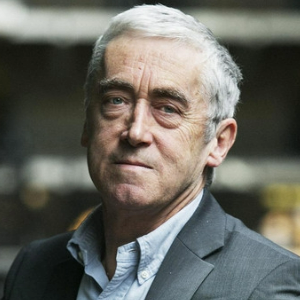
Paul de Grauwe
John Paulson Chair, European Political Economy
European Institute, London School of Economics
Paul de Grauwe
John Paulson Chair, European Political Economy
European Institute, London School of Economics
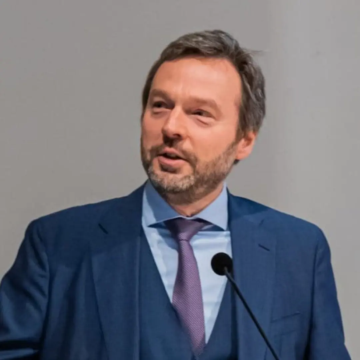
Pierre Wunsch
Governor
National Bank of Belgium
Pierre Wunsch
Governor
National Bank of Belgium
Timings
In person and virtual timings:
London: 18:30 – 20:00
New York: 13:30 – 15:00
Singapore: 1:30 – 3:00
Host