
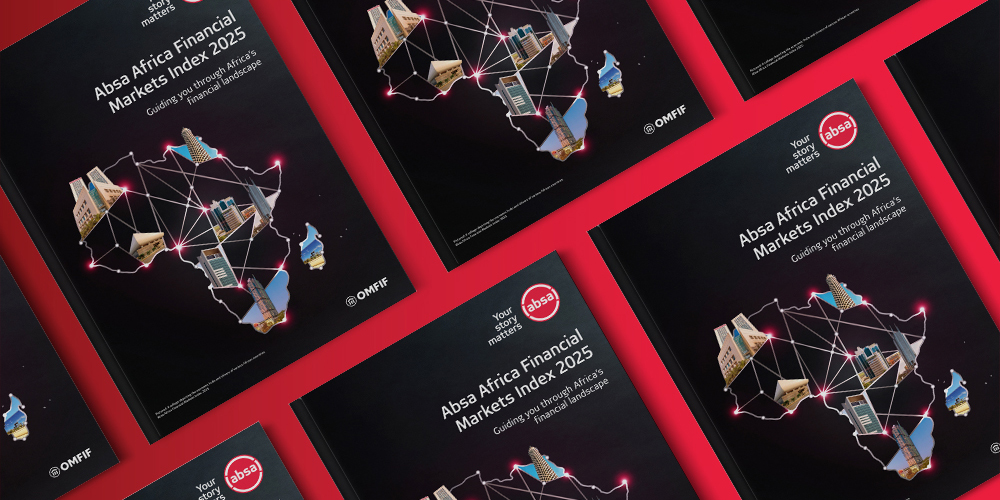
Progress despite global headwinds
The past 12 months have seen highs and lows around the world. Difficult macroeconomic conditions, compounded by a turbulent trade environment and geopolitical tensions, have created challenges for African economies.
As a result, countries in this year’s Absa Africa Financial Markets Index have seen their progress hampered by global headwinds. While a third of countries were able to improve their overall scores, the remaining two-thirds saw their scores fall or remain unchanged. However, this is just the surface story. The detail shows important developments in a number of areas.
The index assesses financial market development across the continent through the lens of transparency, accessibility and openness. Now in its ninth year, it provides a benchmark for market infrastructure and an opportunity for policy-makers to learn from improvements across Africa.
With support from the United Nations Economic Commission for Africa, the index covers 29 economies in the region. This equates to approximately 80% of the population and gross domestic product of Africa.
Enter your details on the right to access the report.
Key findings:
- While many economies faced a decline in reserves adequacy in the 12 months to June 2025, countries that prioritised tackling inefficient foreign exchange regimes fared best.
- In total, 18 AFMI economies now offer environmental, social and governance-related or Islamic financial products, providing crucial diversification for both short- and long-term investment.
- Despite backtracks on ESG goals globally in the past year, four AFMI countries have issued green bonds for the first time this year, taking the total number to 14.
- Expectations for GDP growth rose in 22 countries this year despite the more challenging economic conditions.


Supported by:
